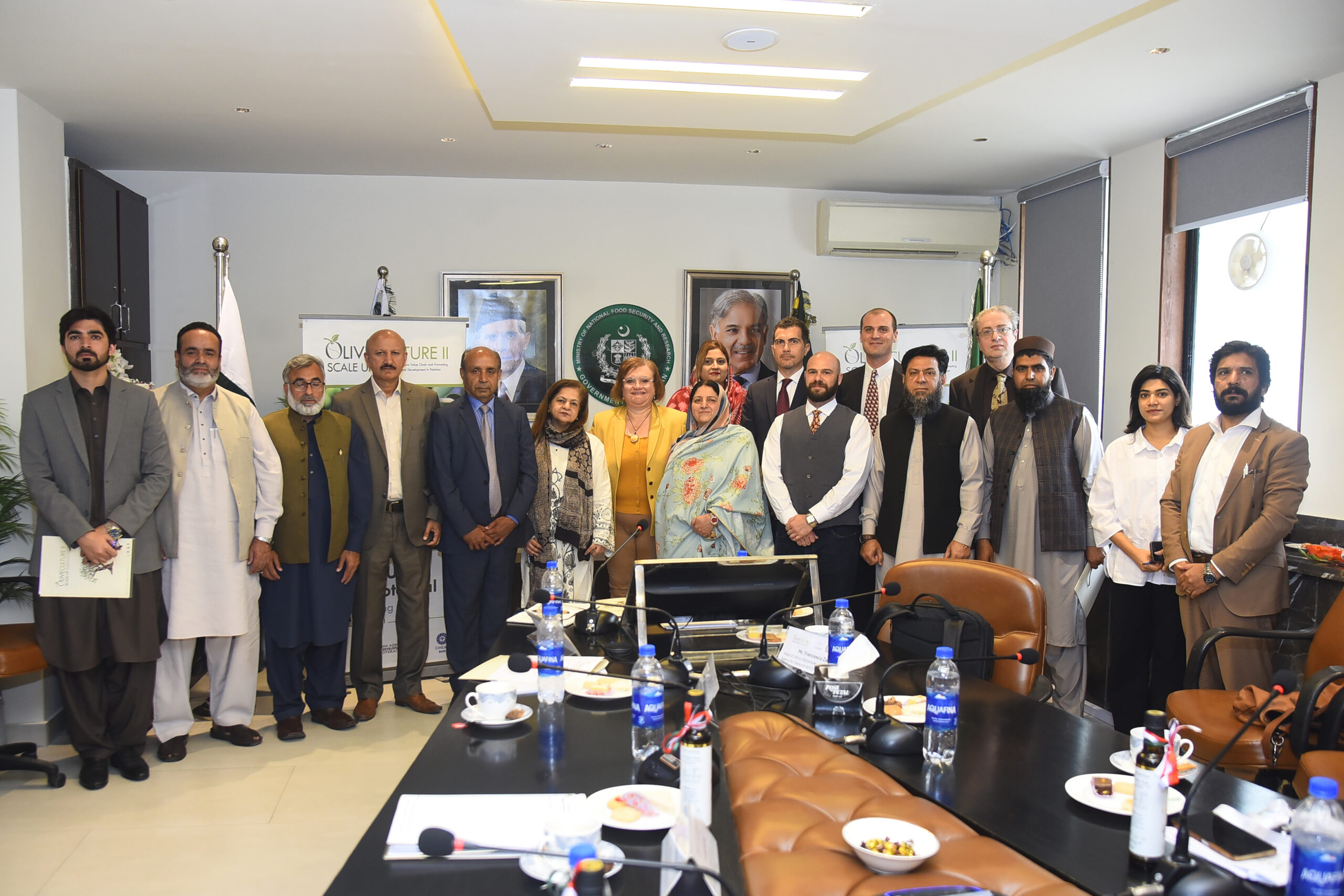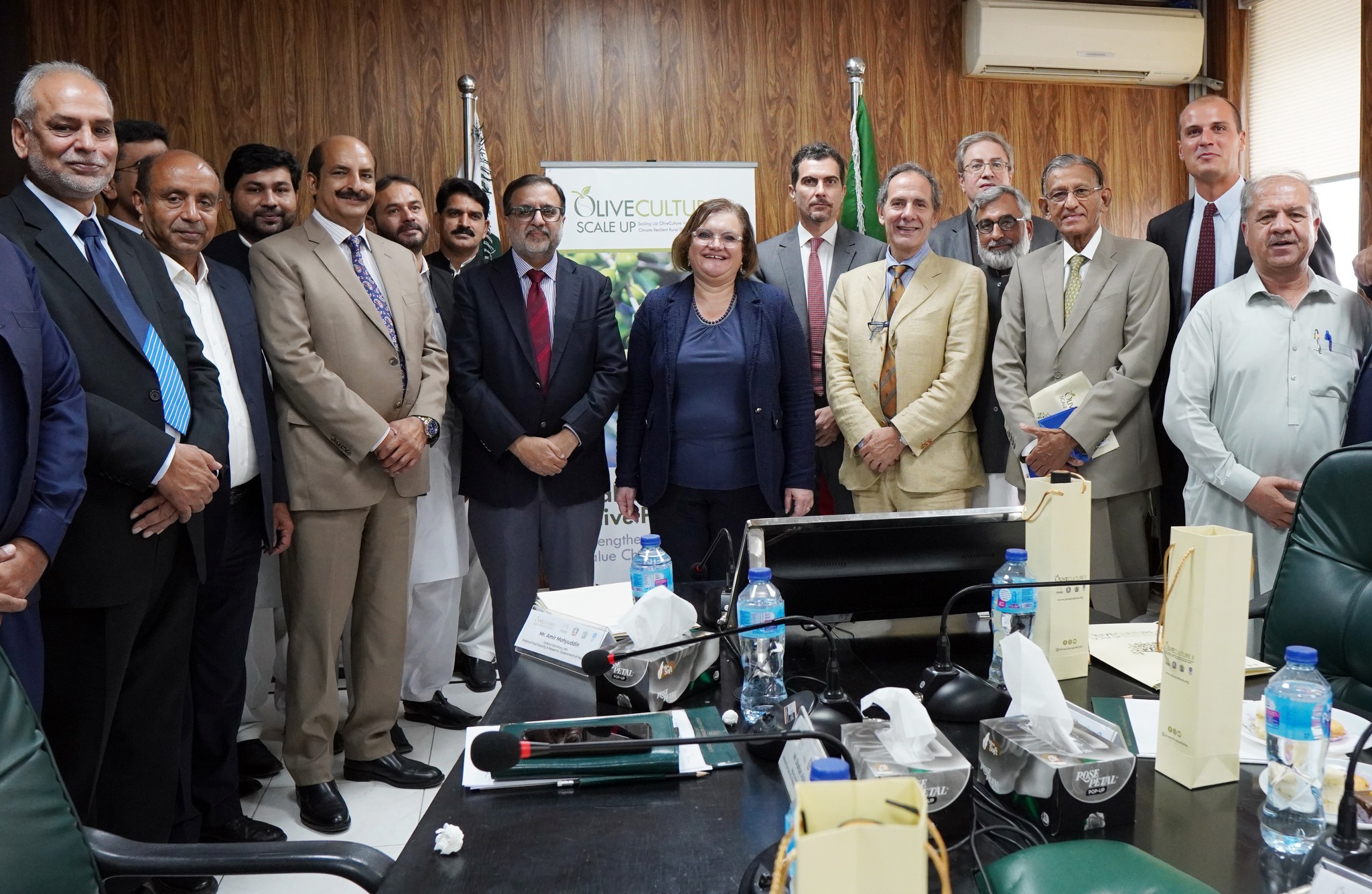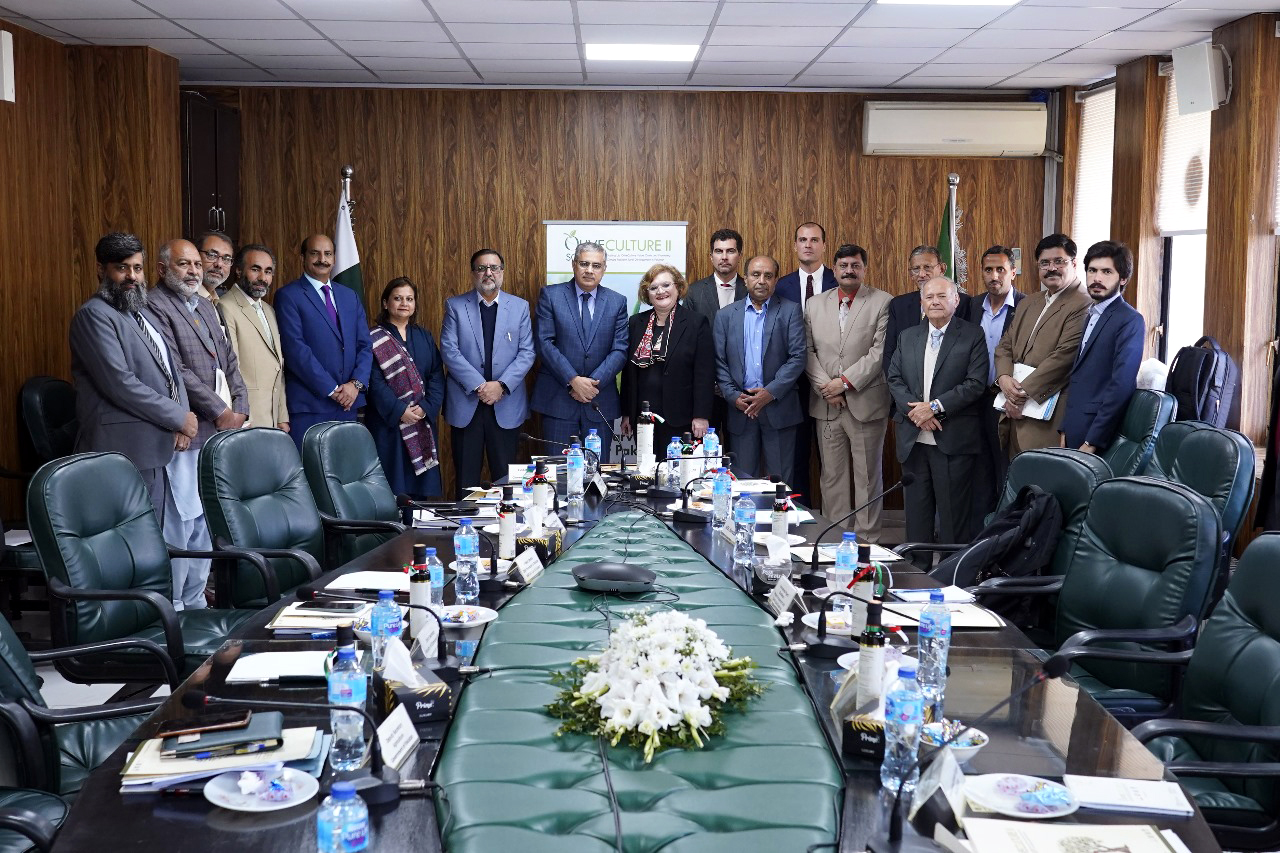
Islamabad, April 02, 2026: The OliveCulture Scale-Up Project convened its Third Steering Committee Meeting at the Ministry of National Food Security and Research, gathering the H.E. Marilina Armellin, Ambassador of Italian Republic in Pakistan, Mr. Musaddiq A.K. Tahirkheli, Federal Secretary, M/o National Food Security & Research, Government of Pakistan, Mr. Dr. Biagio Di Terlizzi, Director of CIHEAM Bari, Mr. Francesco Zatta, Head of Office, the Italian Agency for Development Cooperation, Islamabad, Ministry of Climate Change, National Seed Development and Regulatory Authority, Pakistan Agriculture Research Council (PARC), FSCRD, Provinces representatives from the Government of Pakistan, and Olive sector stakeholders. The Steering Committee, as the highest decision-making body of the project, plays a pivotal role in reviewing project progress, providing strategic direction, and ensuring effective coordination among all institutions involved.
The meeting provided an opportunity to evaluate the achievements of the second year of implementation, while also addressing criticalities, challenges, and lessons learned.
Mr. Musaddiq A.K. Tahirkheli, Federal Secretary, Ministry of National Food Security & Research, highlighted Pakistan’s commitment by expressing his appreciation for the continued support of the Government of Italy, the Italian Agency for Development Cooperation (AICS), and the Economic Affairs Division (EAD, provincial governments & departments in promoting olive cultivation in Pakistan through grant-funded initiatives.
He highlighted the importance of strengthening the olive value chain through an economic and climate-resilient approach, with key contributions from partners such as CIHEAM Bari. He noted that initiatives like the TEVT program, including soft loan schemes, are now in their final stages and will soon contribute to sectoral growth.
Referring to the achievements under the OliveCulture program, he appreciated the progress made in awareness, capacity building, and outreach. He underlined that olive cultivation is emerging not only as a source of edible oil but also as a climate-resilient crop with the potential to foster new industries.
He concluded by expressing optimism for continued collaboration and looked forward to valuable insights and greater success in advancing Pakistan’s olive sector”.
Speaking on the occasion, H.E. Marilina Armellin, Ambassador of Italy to Pakistan, stated, “H.E. Marilina Armellin, Ambassador of the Italian Republic in Pakistan, expressed appreciation to the Federal Secretary, the Italian Agency for Development Cooperation, OliveCulture Scale Up Project and provincial leadership for their strong collaboration, noting that the project has transitioned into an operational phase with tangible results. She highlighted key achievements, including the establishment of phytosanitary laboratories, regional facilities, and nurseries certification, which will play a vital role in ensuring quality and facilitating market access. Emphasizing support for smallholder farmers through strategic partnerships, she underscored the importance of infrastructure development, capacity building, and technology transfer to promote sustainability. The Ambassador also pointed to progress in modern processing and farm support, reinforcing olive oil as a viable indigenous product. She reaffirmed Italy’s continued commitment to supporting Pakistan through technical assistance, institutional coordination, and industry partnerships to strengthen the olive sector’s economic growth”.
Dr. Costantino Parma, CIHEAM Bari, International Project Coordinator, and Dr. Francesco De Musso, International Agricultural Expert, added, “Through this continuous partnership, we are ensuring that technical expertise, institutional support, and grassroots engagement come together to create real impact in the olive sector in Pakistan.”
Dr. Parma highlighted the strong and productive collaboration between Pakistan and Italian partners over the past five years, building on the foundations laid by Dr. Biago, Director of CIHEAM Bari. He noted that this partnership has strengthened Pakistan’s olive sector through advancements in processing, industry development, and community engagement. He also emphasized the role of training, research, and technology transfer in driving sustainable growth. Together, these efforts are contributing to inclusive economic growth, food security, and sustainable livelihoods.
The third Steering Committee Meeting officially approved the Interim technical report and the 2nd year Annual Working Plan and reaffirmed the commitment of all stakeholders to advancing the olive sector in Pakistan. By aligning national priorities with international technical expertise, the project aims to create a lasting impact on agricultural development and rural prosperity.