From Policy to Prosperity
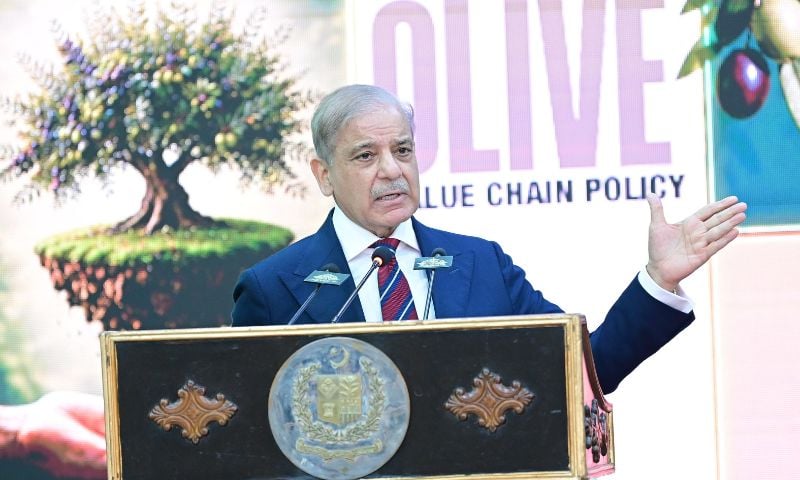
Framed the olive policy as a national economic effort to cut the edible-oil import bill, back farmers, and deepen the partnership with Italy.
Read full addressOfficially launched by the Prime Minister of Pakistan, H.E. Muhammad Shehbaz Sharif — a national framework, with an Implementation Strategy and Road Map to 2030, to build a complete olive value chain, cut the country’s edible-oil import bill, and drive climate-resilient rural development.
The Pakistan National Olive Value Chain Policy sets a coordinated national framework — moving the country from scattered olive-sector interventions to an integrated value chain spanning production, processing, quality and certification, value addition, branding, marketing and exports.
Developed under the OliveCulture Scale-Up project by CIHEAM Bari with the Government of Pakistan and funded by the Italian Agency for Development Cooperation (AICS), the policy comes with an Implementation Strategy and Road Map to 2030, positioning olive as a strategic crop for food security and import substitution.
Explore the complete record of the National Olive Value Chain Policy launch ceremony.
Who launched the policy, where and how the ceremony unfolded — the full event story.
View detailsSummaries, key figures and video clips from the principal dignitaries.
Read addressesWhere the event was featured — press logos and links to full coverage.
See coverageDownload the official policy PDFs and supporting documents.
Get documentsPrincipal addresses delivered at the launch ceremony.
Short description of the address — replace with summary line.
Read addressShort description of the address — replace with summary line.
Read addressCovered by 20+ media and institutional platforms across Pakistan and Italy — including national, business, government and international outlets.
Access the official policy document and all supporting materials.
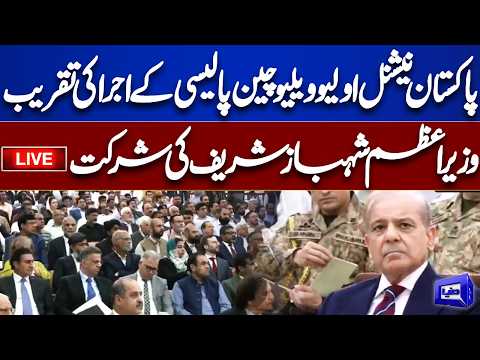
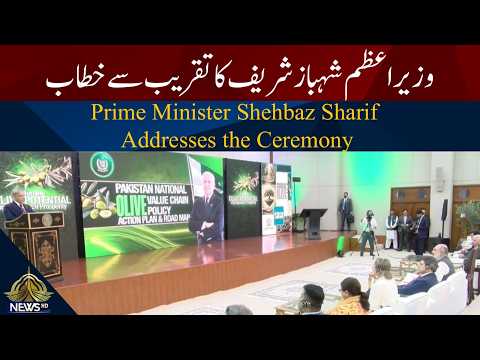
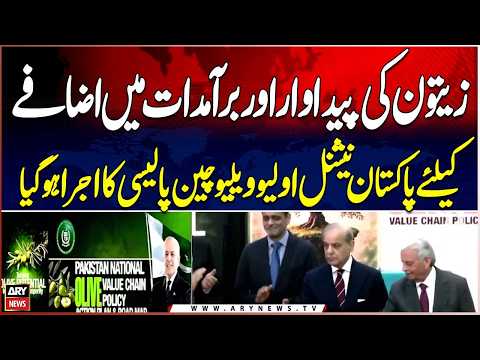
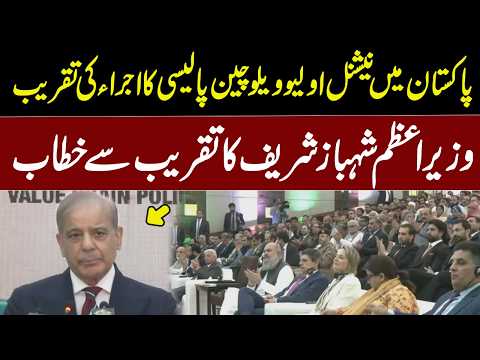
Officially inaugurated by the Prime Minister of Pakistan at the PM Office Auditorium in Islamabad — a national milestone for climate-resilient rural development and edible-oil security.
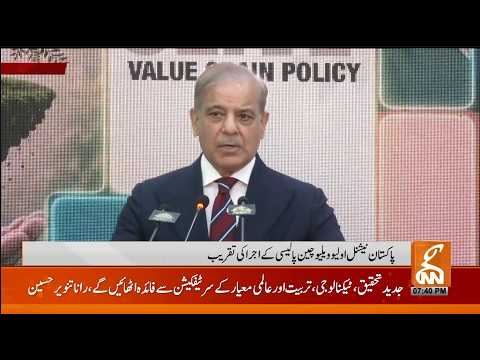
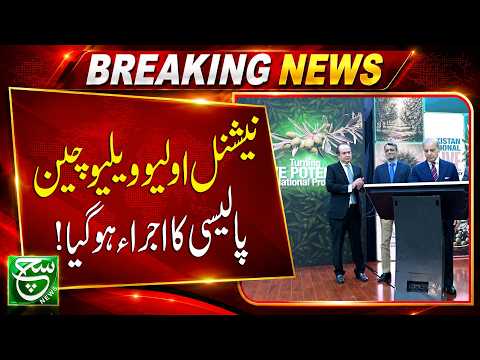
On 24 August 2026, the Prime Minister of Pakistan, H.E. Muhammad Shehbaz Sharif, formally launched the Pakistan National Olive Value Chain Policy along with its Implementation Strategy and Road Map to 2030 — the culmination of years of technical and institutional work under the OliveCulture Scale-Up project.
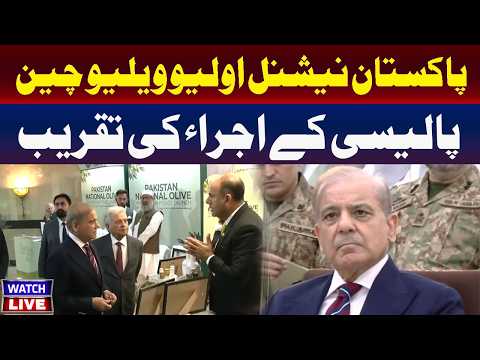
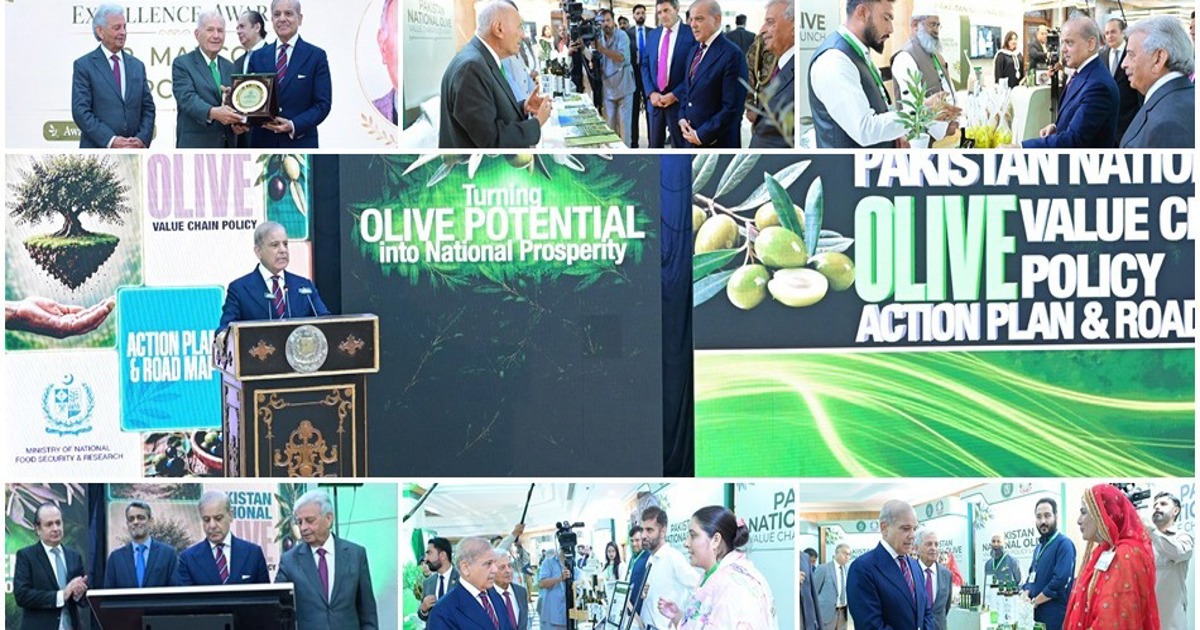
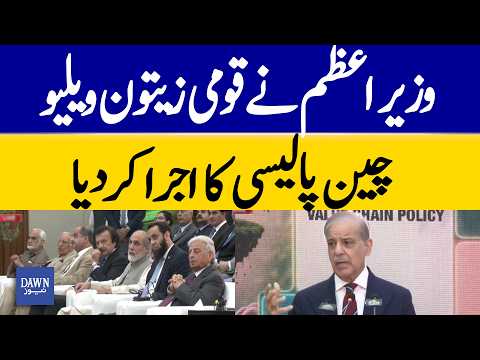
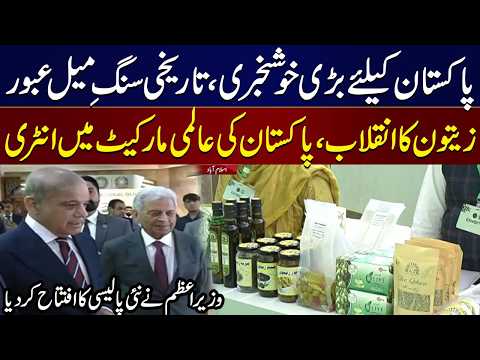
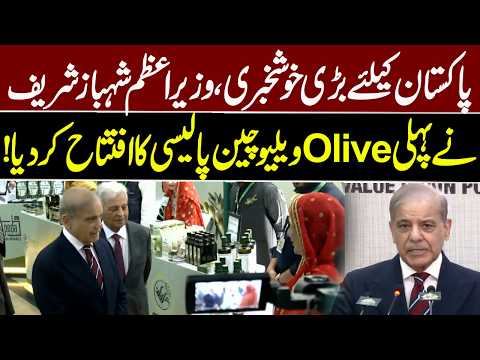
The Prime Minister arrived ceremonially and walked through the exhibition, visiting Olive Business Development Group stalls, the OliveCulture Scale-Up project stall, and a live olive oil sensory tasting booth. The Federal Secretary, Amir Ali Ahmad, then delivered the welcome remarks and introduced the policy, followed by special remarks from the Ambassador of Italy, H.E. Ugo Ciarlatani, on Italy’s partnership in Pakistan’s olive sector.
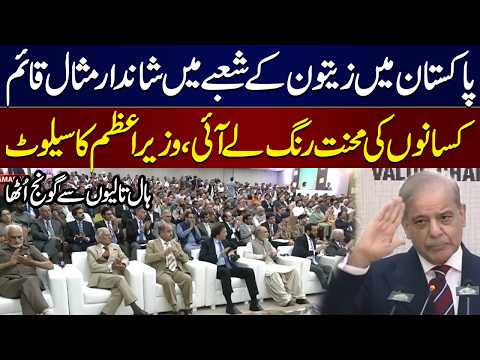
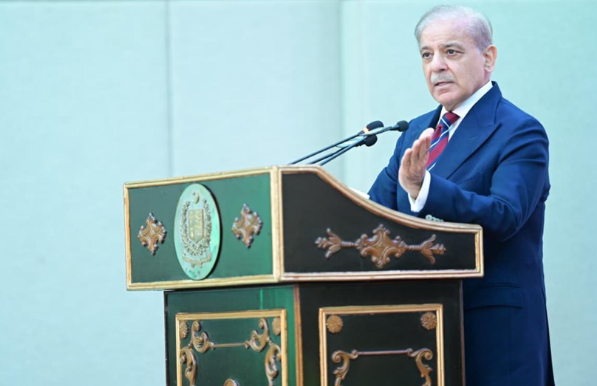
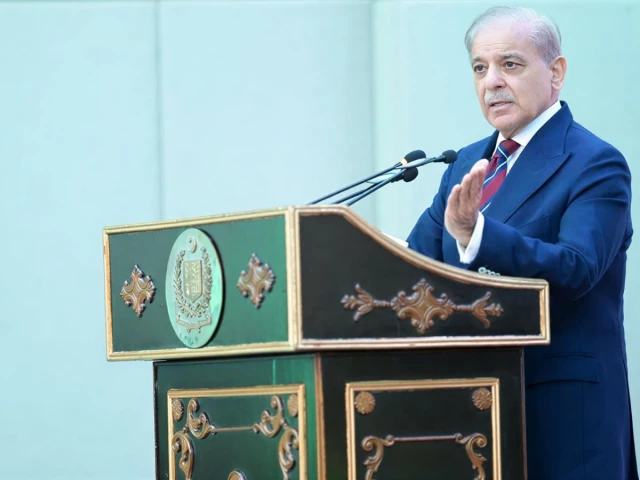
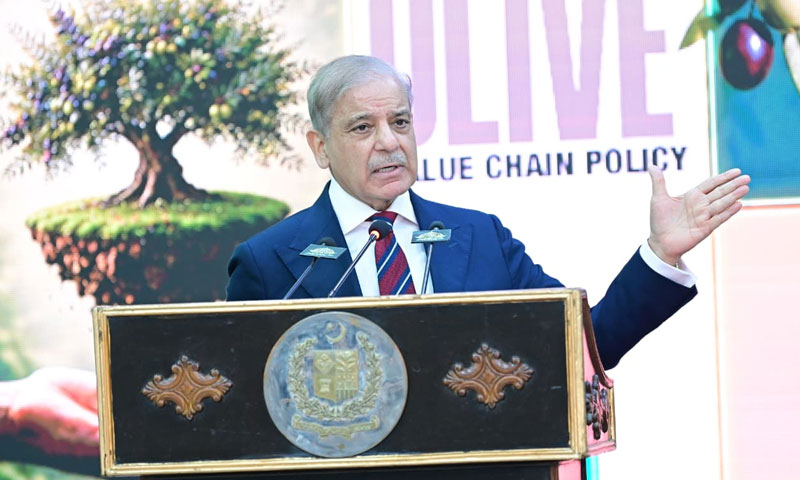
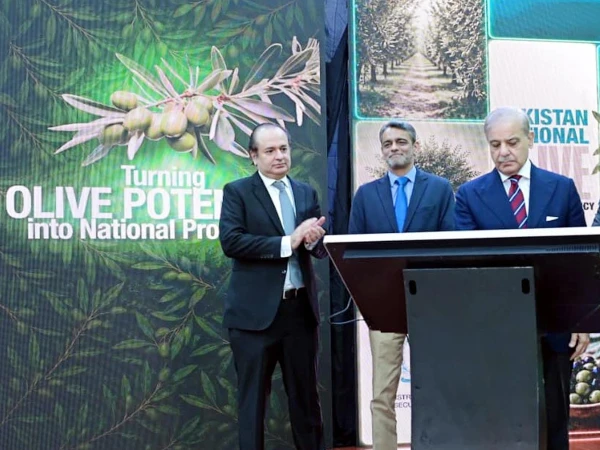
A highlight of the ceremony was a moderated dialogue on the success stories of farmers and olive-sector entrepreneurs, followed by special remarks from the Federal Minister MNFS&R, H.E. Rana Tanveer Hussain. The Prime Minister then officially launched the policy, distributed awards to the sector’s best contributors, and delivered his address as chief guest.
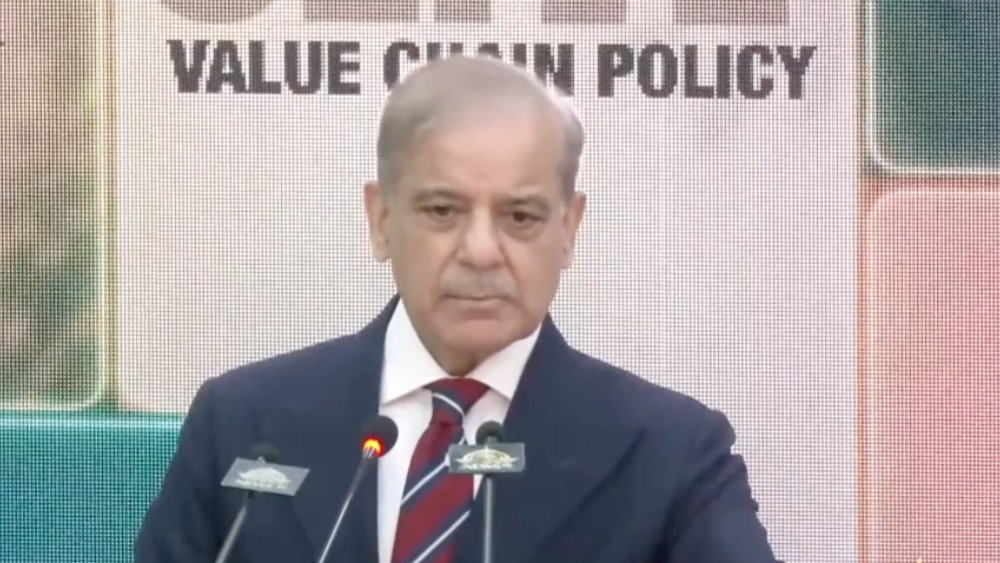
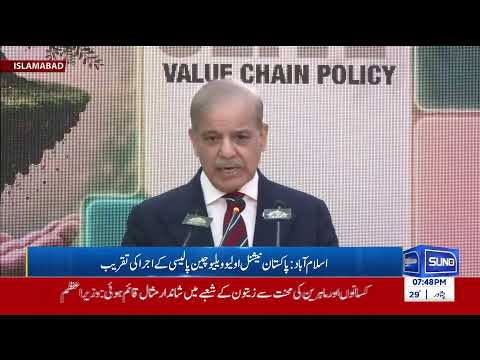
In his address, the Prime Minister noted that Pakistan spends roughly US$4 billion a year on edible-oil imports and that expanding domestic olive production could save around US$400 million annually. He also announced that 100 agricultural graduates would be sent to Italy for specialised training.
Moderated by Ahmed Umair — Prime Minister’s Coordinator on Agriculture & Food Security
The Prime Minister honoured leading contributors to Pakistan’s olive sector.
A foremost architect of Pakistan’s olive sector and a principal architect of the National Olive Value Chain Policy and its 2024–2030 roadmap.
Pioneer of Pakistan’s extra-virgin olive oil brand Loralai Olives — with international wins in New York, London and Berlin and a Gold Medal in Dubai (2026).
Founder of Casa Loralai “Made-in-Pakistan” premium olive oil, honoured with a Gold Medal at a July 2026 international competition in London.
The first woman in Khyber Pakhtunkhwa to establish an olive orchard (2008), with 14,000 plants — a pioneer of large-scale olive cultivation in Pakistan.
Expert sessions on the science and inclusiveness of the olive value chain.
Highlights from the arrival, exhibition walkthrough and stage proceedings.
Summaries, key figures and video clips from the principal addresses.
The principal addresses delivered at the launch — a short brief on each, with the full address a click away.
Tap “Read full address” to open the complete speech.
Framed the olive policy as a national economic effort to cut the edible-oil import bill, back farmers, and deepen the partnership with Italy.
Read full addressTraced 70+ years of Pakistan–Italy cooperation and the institutions built behind Pakistan’s olive economy.
Read full addressPut quality, value addition, technology and market access at the heart of the sector’s next phase.
Read full addressSet a value-creation, climate-responsive vision — from orchards to a competitive olive economy.
Read full addressThe National Olive Value Chain Policy launch was covered across 20+ media and institutional platforms in Pakistan and Italy.
A selection of national, business, government and Urdu-language reports — tap any card to open the original story.
APPEnglish
Business RecorderEnglish
Express TribuneEnglish
Pakistan TodayEnglish
ProfitEnglish
Radio PakistanEnglish
Radio PakistanUrdu
HUM EnglishEnglish
ProPakistaniEnglish
Mettis GlobalEnglish
Daily TimesEnglish
ExpressUrdu
WE NewsEnglish
Dunya NewsEnglish
Daily AusafEnglish
Pakistan TVEnglish
ANSA — ItalyItalian
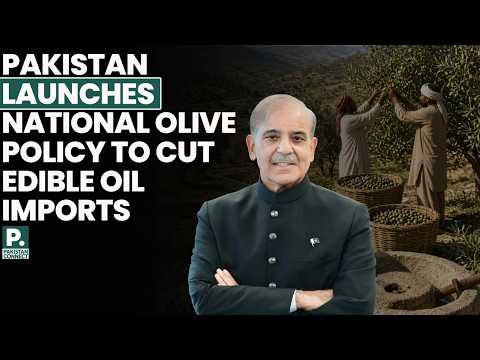
Pakistan ConnectEnglishPrime Minister Muhammad Shehbaz Sharif links the National Olive Value Chain Policy with import substitution, farmer prosperity, youth skills and an expanding agricultural partnership with Italy
Pakistan’s ambition to develop its olive sector has acquired a distinctly economic dimension.
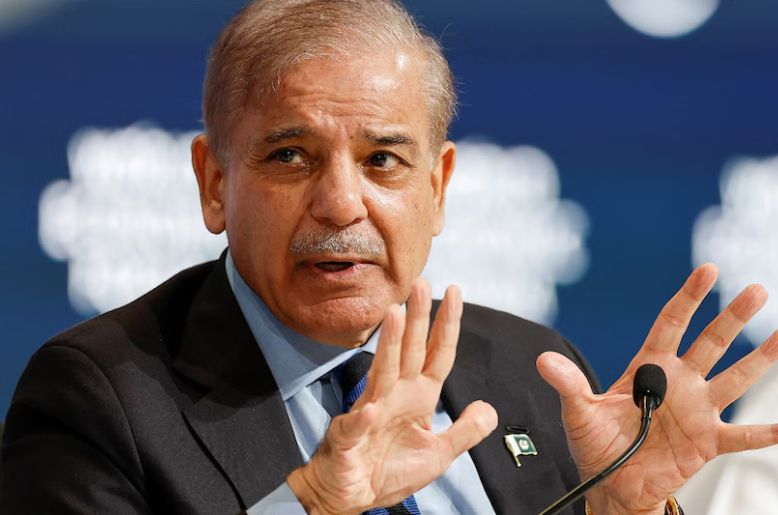
Launching the Pakistan National Olive Value Chain Policy, Prime Minister Muhammad Shehbaz Sharif framed olive cultivation not simply as an agricultural opportunity, but as part of a larger national effort to strengthen domestic production, support farmers and reduce Pakistan’s dependence on imported edible oil.
At the centre of his address was a straightforward economic challenge: Pakistan spends approximately US$4 billion annually on edible oil imports. Even reducing that bill by US$400 million a year, the Prime Minister argued, would constitute a significant national contribution.
The Policy therefore arrives with expectations extending well beyond the orchard. It connects agriculture with economic resilience, skills development, modern processing and international cooperation—and places farmers at the centre of that transition.
Prime Minister Shehbaz Sharif described practical action towards an agricultural revolution as essential and reaffirmed the Government’s commitment to providing farmers with the support required to achieve it.
His address recognised the contribution already being made by olive growers, researchers and exporters across Pakistan. Farmers from different regions were singled out for their work, while federal and provincial cooperation was presented as essential to creating the enabling conditions for further expansion.
The significance of this approach lies in connecting individual agricultural success with a larger national objective.
For Pakistan, increasing domestic edible oil production is not only about agricultural diversification. It carries implications for foreign exchange, rural incomes and the country’s ability to reduce a substantial structural import dependency.
Olives form one part of that broader response.
“Pakistan spends approximately US$4 billion annually on edible-oil imports — even a US$400 million saving would be a significant national gain.
The Prime Minister’s remarks also gave particular recognition to the people already demonstrating the possibilities of the sector.
He acknowledged the efforts of farmers and experts whose sustained work has contributed to Pakistan’s progress in olive cultivation, specifically recognising growers and entrepreneurs from Loralai, Mardan and Chakwal.
Their experiences brought a human dimension to the Policy.
Agricultural transformation is often discussed through targets, production figures and institutional frameworks. But its practical success ultimately depends on whether farmers can adopt new approaches, manage risk, access knowledge and convert agricultural potential into viable livelihoods.
The Prime Minister’s message was that government support must accompany that effort, with federal and provincial institutions working together to facilitate farmers and accelerate practical progress in agriculture.
The economic opportunity identified by the Prime Minister extends beyond replacing imported oil with domestic production.
His address pointed towards cooperation in olive production, value addition, modern processing and exports—areas that will determine whether Pakistan can move from being an emerging producer towards developing a commercially sustainable olive industry.
That distinction is central to the National Olive Value Chain Policy.
Cultivation creates the agricultural base. Processing and value addition increase the economic return on that production. Marketing and commercial development create demand. And quality-oriented production provides the foundation from which locally produced olive oil can compete more effectively.
The challenge ahead is therefore not merely to produce more, but to build the capabilities required across the entire chain.
Italy occupied a significant place in the Prime Minister’s vision for the next phase of Pakistan’s olive-sector development.
Prime Minister Shehbaz Sharif described Pakistan–Italy relations as a longstanding partnership, noting decades of cooperation in areas including agriculture and tractor manufacturing. Within the olive sector, he called for the two countries to further expand cooperation in production, value addition, modern processing and exports.
The relationship is particularly relevant because Pakistan is now moving into precisely those areas where specialised knowledge, technical capacity and international exposure become increasingly important.
Within this wider Pakistan–Italy development partnership, CIHEAM Bari’s technical engagement in Pakistan’s olive sector provides an important institutional dimension, supporting the development of capacities required across a modern olive value chain.
While the Prime Minister’s address focused on the broader bilateral partnership with Italy rather than detailing individual project interventions, the direction he articulated—towards better production, processing, value addition and international competitiveness—is closely aligned with the technical development of Pakistan’s olive sector being pursued through this cooperation.
Perhaps the clearest indication of where the Pakistan–Italy partnership is heading came through the Prime Minister’s announcement concerning Pakistan’s young agricultural professionals.
He announced that 100 young Pakistani agricultural graduates will be sent to Italy to receive advanced training in olive cultivation, processing, marketing and different components of the value chain.
The announcement gives human-capital development a central role in the future of the sector.
For an emerging olive economy, exposure to established international expertise can help create a generation of professionals able to connect agricultural science with commercial application. The value of such training will ultimately lie in how effectively knowledge gained abroad is transferred back into Pakistan’s orchards, processing facilities, institutions and enterprises.
It also gives the bilateral partnership a forward-looking dimension: moving beyond technical cooperation around current needs towards investing in the professionals who may shape the sector over the coming decades.
The Prime Minister’s address ultimately positioned the National Olive Value Chain Policy within a larger question confronting Pakistan: how can agriculture contribute more effectively to national economic resilience?
The answer presented at the launch combines several elements—supporting farmers, increasing domestic production, developing modern value chains, investing in young professionals and learning from international partners.
In the olive sector, these priorities now come together under a national policy framework.
Pakistan’s relationship with Italy, complemented by the specialised technical contribution of institutions such as CIHEAM Bari, provides an important international partnership as the country moves towards the next stage of that journey. The Prime Minister’s decision to send 100 agricultural graduates to Italy gives that relationship an additional investment in knowledge, skills and the future generation of the sector.
But the measure of success will ultimately be domestic: stronger farmers, better products, greater value addition and a meaningful reduction in Pakistan’s reliance on imported edible oil.
In that sense, the Policy is not simply about growing olives.
It is about converting Pakistan’s agricultural potential into economic value—and ensuring that the prosperity created through that process reaches the farmers, professionals and communities on whom the sector ultimately depends.
Ambassador Ugo Ciarlatani traces the evolution of Pakistan–Italy cooperation from early development investments to a national olive policy, highlighting the role of OliveCulture, CIHEAM Bari and AICS in building institutions, skills and opportunities across the value chain
For Italy and Pakistan, the launch of the Pakistan National Olive Value Chain Policy represents more than the introduction of a new agricultural framework. It is the latest milestone in a development partnership that has evolved over decades—from scientific and cultural cooperation to agriculture, skills development and, increasingly, the creation of specialised institutions capable of supporting Pakistan’s emerging olive economy.
Speaking at the Policy launch, H.E. Ugo Ciarlatani, Ambassador of Italy to Pakistan, described the occasion as an achievement that once again demonstrates the strength of the relationship between the two countries.
His address placed the Policy within a much longer trajectory: one in which development cooperation has progressively moved from individual interventions towards strengthening an entire value chain and, ultimately, contributing to a nationally owned policy framework.
Ambassador Ciarlatani traced Pakistan–Italy cooperation back more than 70 years, recalling the pioneering work of Italian experts in Pakistan during the 1950s, including Ardito Desio’s expeditions and research in the Karakoram in 1954 and the early Italian archaeological mission in Swat led by Giuseppe Tucci in 1955.
What began through shared interests in Pakistan’s cultural and environmental heritage, he noted, has continued to expand in both scope and ambition.
Today, the bilateral relationship encompasses fields ranging from agriculture, science and education to trade, migration and security.
The olive sector is one of the clearest contemporary examples of how that relationship has evolved from cooperation into long-term development engagement.
“For Italy, olive oil is not merely a commodity — it is connected to food, identity, tradition and a way of life.
The Ambassador connected the origins of Pakistan’s modern olive journey with the Pakistan–Italy Debt Swap Agreement, describing the US$100 million programme as an initiative that transformed debt into development and prosperity for communities across Pakistan.
It was within this framework, he recalled, that some of the country’s first productive olive orchards were established.
By 2016, Pakistan had approximately 500,000 olive trees. Today, according to the figures presented in his address, more than seven million olive plants are cultivated across the country.
The growth is significant, but the Ambassador’s message went beyond plantation numbers.
As Pakistan’s olive-growing base expanded, the development challenge also changed. Increasing the number of trees was no longer enough. The sector needed stronger technical capacity, quality systems, nurseries, trained professionals, entrepreneurship and commercial structures capable of turning production into sustainable economic opportunity.
It is within this next stage that the OliveCulture Project and Italy’s specialised development cooperation have assumed particular importance.
Ambassador Ciarlatani noted that, since 2022, Italian cooperation has continued its support to Pakistan’s promising olive value chain through the OliveCulture Project, working to increase the quantity and quality of olive production while strengthening the commercialisation of olive oil.
Implemented by CIHEAM Bari, the Project has supported the development of technical and institutional capacities across multiple components of the value chain.
The Ambassador cited a series of tangible results: Pakistan’s olive sector can now rely on a sensory laboratory and three phytosanitary laboratories, trained and certified professionals including chemists and plant pathologists, seven notified nurseries across the provinces, 36 active business development groups led by women and youth, and more than 700 public- and private-sector stakeholders trained across different components of the olive value chain.
These figures, he emphasised, represent only part of what Italy’s support has contributed to the sector.
Yet their importance lies in what they collectively represent: a gradual transition from supporting olive cultivation to building the technical, human and institutional architecture of an industry.
The Ambassador specifically acknowledged CIHEAM Bari for facilitating the process and supporting the development of Pakistan’s olive value chain through its internationally recognised expertise. He also expressed appreciation for the Italian Agency for Development Cooperation (AICS) for its continuing management, guidance and support to Italy’s development cooperation efforts in Pakistan.
For Ambassador Ciarlatani, the achievement being celebrated was ultimately a unifying one: a single National Olive Value Chain Policy.
He congratulated Prime Minister Muhammad Shehbaz Sharif and the Ministry of National Food Security & Research for reaching this milestone, describing the Policy as a framework that identifies the context, challenges and opportunities facing Pakistan’s olive value chain while establishing a structured road map with priorities and objectives.
Its potential, in his assessment, lies in its capacity to help transform an emerging sector into a thriving agro-industry, generating socioeconomic benefits for producers and consumers and creating particular opportunities for farmers, women and young people.
This is where the Policy acquires significance from a development-cooperation perspective.
Projects can introduce expertise, build laboratories, strengthen nurseries and train professionals. A national policy can connect those investments to a longer-term institutional direction and provide a framework within which their benefits can continue to grow.
The Ambassador also connected olive-sector development with Italy’s wider commitment to technical and vocational education and training in Pakistan.
He recalled earlier cooperation under the poverty reduction programme, through which training models focused on rural development, olive cultivation and value-chain development reached rural communities.
That experience has now been followed by another significant bilateral initiative: the €20 million Professional Capacity Building and Extension in Agriculture programme, with a particular focus on technical and vocational education and training in high-value agriculture—including olive cultivation, production and valorisation.
The emphasis on skills is consequential.
A sustainable olive economy ultimately depends not only on infrastructure and policy, but on the people capable of operating laboratories, managing orchards, processing olive oil, maintaining quality, developing enterprises and bringing products successfully to market.
Amid the institutional achievements and development figures, Ambassador Ciarlatani introduced a distinctly personal dimension to the relationship between Italy and olive oil.
Olive oil, he explained, is deeply embedded in Italian culture, regional identity and everyday life. He recalled telling the Prime Minister that he still enjoys “pane e olio” every morning—a simple slice of bread topped with olive oil.
The anecdote carried a broader message.
For Italy, olive oil is not merely an agricultural commodity. It is connected to food, identity, tradition and a way of life. The Ambassador expressed the hope that, through the new Policy, increasing numbers of Pakistanis would also come to appreciate this “treasure.”
For Pakistan, developing an olive economy will therefore involve more than expanding supply. It will also require developing markets, consumer awareness and a stronger culture around locally produced olive oil.
The trajectory outlined by Ambassador Ciarlatani—from the first productive orchards to millions of olive plants, from technical assistance to laboratories and professional capacities, and now from sectoral interventions to a unified national policy—illustrates how long-term development cooperation can evolve.
The Pakistan National Olive Value Chain Policy is a Pakistani national framework. But its emergence also reflects years of partnership, knowledge exchange and institutional investment.
Within that journey, Italy, AICS, CIHEAM Bari and the OliveCulture Project have contributed technical expertise and development support aimed at enabling Pakistan to build its own capacities across the olive value chain.
As Ambassador Ciarlatani concluded, the success of the Policy will ultimately be measured in the years ahead—by the progress of Pakistan’s olive sector, by the communities that benefit from it, and by the continued strength of the partnership between the two countries.
From orchards to institutions, and from cooperation to national policy, the olive sector has become a tangible expression of the enduring development partnership between Italy and Pakistan.
Federal Minister Rana Tanveer Hussain places quality, value addition, technology and market access at the heart of Pakistan’s next phase of olive-sector development
The future of Pakistan’s olive sector will depend not simply on how much the country produces, but on how effectively that production is transformed into quality products, viable enterprises and access to markets.
This was the central economic argument presented by Rana Tanveer Hussain, Federal Minister for National Food Security & Research, at the launch of the Pakistan National Olive Value Chain Policy.
His address positioned the Policy as more than the introduction of another agricultural framework. In his words, the occasion was about determining “a new direction for agriculture”—one in which research, technology, young professionals and commercially integrated value chains become increasingly central to agricultural development.
One of the strongest themes of the Federal Minister’s address was the changing nature of agricultural competitiveness.
Modern agricultural markets, he argued, are no longer defined by production alone. The real competition increasingly lies in quality, value addition, packaging, branding, marketing and, above all, market access.
For Pakistan’s olive sector, this represents an important change in perspective.
Growing olives creates agricultural output. Building an industry around olives requires the ability to process that output efficiently, certify its quality, package it competitively, build consumer confidence and connect producers with viable markets.
The National Olive Value Chain Policy brings these different elements into the same development conversation.
“Just as a diamond gains value through cutting and refinement, the true value of olives does not lie in production alone.
The Federal Minister also drew attention to the wider economic ecosystem that can develop around olive cultivation.
From nurseries, irrigation systems, machinery and harvesting to processing, certification, packaging, marketing and exports, he described a chain of interconnected activities capable of generating businesses and employment beyond the farm itself.
In this sense, an olive tree is not simply an agricultural asset.
It can become the starting point of a much broader rural economy.
This potential is particularly significant, he observed, in areas where conventional crops may not provide sufficient economic returns. In such locations, olive cultivation can present an alternative opportunity—but its real economic value will depend upon the strength of the value chain developed around it.
To illustrate the point, Rana Tanveer Hussain used a simple but powerful comparison: just as the value of a diamond increases through cutting and refinement, the true value of olives does not lie in production alone.
It emerges through better processing, attractive packaging, strong branding and effective marketing.
That analogy captures an important development-sector principle embedded in the new Policy.
Agricultural development creates greater economic impact when farmers and enterprises are able to participate in the stages where additional value is generated. For Pakistan, therefore, developing olive orchards is only one part of the equation. The larger objective is to create a profitable and commercially viable value chain capable of converting agricultural potential into sustained economic activity.
The Federal Minister also connected the future of agriculture with investment in human capital.
Referring to young Pakistanis returning after agricultural training in China, he described them as a valuable asset for the country’s agricultural future and acknowledged the Prime Minister’s investment in young professionals.
His argument was that the value of such training becomes particularly important when research, technology and modern thinking are connected directly with farmers.
That connection between scientific knowledge and practical agriculture will be critical to the development of a stronger olive value chain.
It also reinforces a broader direction within the Policy: moving agriculture away from isolated production towards a system in which farmers, technical professionals, researchers, businesses and markets operate as interconnected parts of the same economic chain.
Pakistan’s progress is also taking place within a changing international context.
Rana Tanveer Hussain recalled that Pakistan had applied for permanent membership of the International Olive Council (IOC) in 2014. He described the country’s eventual accession as a major achievement under the present government and the leadership of Prime Minister Muhammad Shehbaz Sharif.
For an emerging olive-producing country, participation in the international olive system carries particular significance.
It places Pakistan’s domestic ambitions alongside the wider international conversation around olive-sector research, technology, training, quality and certification—all areas that the Federal Minister identified as important for the sector’s future development.
The Federal Minister’s emphasis on research, technology, training, quality and internationally recognised certification also provides the development context for Pakistan’s cooperation with Italy in the olive sector.
In the official account of his remarks at the ceremony, Rana Tanveer Hussain specifically stated that Pakistan intends to benefit from modern research, technology, training and international-standard certification, while cooperation between Pakistan and Italy in the olive sector would be expanded through joint initiatives.
Within this partnership, CIHEAM Bari has an important technical role in supporting the development of Pakistan’s olive value chain.
The relevance of that cooperation is closely aligned with the Minister’s central argument. If Pakistan’s next challenge is to move from production towards quality, processing, certification and markets, international technical cooperation can help strengthen precisely the knowledge and institutional capacities required to make that transition.
Italy brings to this partnership the experience of a mature olive economy, while cooperation through specialised institutions such as CIHEAM Bari provides an avenue through which technical expertise can contribute to Pakistan’s own sector development.
The objective is not simply to replicate another country’s model, but to strengthen Pakistan’s capacity to build a value chain suited to its own farmers, enterprises, production environments and emerging market opportunities.
Pakistan’s olive journey has already demonstrated that the crop can establish itself within the country’s agricultural landscape.
The next challenge, as Rana Tanveer Hussain’s address made clear, is fundamentally different.
It is about transforming that agricultural base into a strong and profitable value chain—one capable of generating businesses, employment, quality products and access to markets.
That requires investment not only in orchards, but in people, technology, processing, certification, packaging, branding and commercial capability. It also requires international partnerships that can connect Pakistan with knowledge, standards and technical expertise.
The National Olive Value Chain Policy provides a framework for bringing those elements together.
As the Federal Minister looked towards the next chapter, his message placed responsibility not on government alone, but across the sector: Pakistan’s farmers, businesses and young people will ultimately write the next chapter of prosperity emerging from the country’s olive orchards.
Federal Secretary Amir Ali Ahmad outlines a policy vision centred on value creation, climate-responsive agriculture, youth participation and stronger integration with the international olive sector
Pakistan’s olive sector is entering a phase in which success will increasingly be measured not by the number of trees planted, but by the economic value created around them.
That was the central development message emerging from the address of Amir Ali Ahmad, Federal Secretary, Ministry of National Food Security & Research, at the launch of the Pakistan National Olive Value Chain Policy, together with its Implementation Strategy and Road Map.
For the Federal Secretary, the Policy represents a transition from an essentially production-oriented approach towards a more complete olive economy—one that connects cultivation with processing, value addition, quality, branding and markets.
The significance of this transition extends beyond olives.
Amir Ali Ahmad placed the Policy within the larger challenge of climate change and the need for Pakistan to move beyond conventional agricultural approaches. With natural resources under increasing pressure, he argued that the country needs agricultural choices capable of creating greater value with fewer resources.
It is within this changing agricultural landscape that he identified olives as a major opportunity.
The argument is particularly relevant for the future direction of agricultural development: productivity alone is no longer sufficient. The ability of a crop to generate value beyond the farm—to support processing, services, businesses and markets—has become equally important.
The National Olive Value Chain Policy is intended to provide that broader framework.
“Success will be measured not by the number of trees planted, but by the economic value created around them.
A particularly important message from the Federal Secretary was the need to move beyond an approach centred only on plantation.
Under the Prime Minister’s direction, he said, the objective is not to remain limited to planting olive trees, but to establish a strong system covering production, processing, value addition, quality, branding and marketing.
This distinction captures the economic rationale behind the Policy.
An expanding orchard base provides the raw material. But the longer-term economic opportunity emerges when that production is connected with processing capacity, quality assurance, product development, branding and access to consumers.
The Federal Secretary also articulated a regional ambition for the sector, envisioning Pakistan as an important centre for olive oil production and exports serving markets across South Asia, Central Asia and East Asia.
It is an ambitious proposition, but one that places competitiveness—and not simply cultivation—at the heart of Pakistan’s olive-sector strategy.
The presence of young entrepreneurs at the Policy launch carried particular significance in Amir Ali Ahmad’s address.
He described the young pioneers present at the ceremony as evidence of what can happen when new economic opportunities are created: Pakistan’s younger generation is willing to step forward and participate.
Their recognition by the Prime Minister was therefore more than ceremonial. It placed entrepreneurship and youth participation within the larger development narrative of the olive sector.
If the Policy succeeds in expanding opportunities across production, processing, quality services, branding and marketing, the olive value chain could create economic space not only for traditional farmers, but also for a new generation of agricultural professionals and entrepreneurs.
Pakistan’s domestic ambitions are also being accompanied by greater international integration.
The Federal Secretary highlighted Pakistan’s formal membership of the International Olive Council, noting that the country took its seat at the Council’s 123rd session in Portugal on 30 June.
The development represents an important institutional step for an emerging olive-producing country seeking to strengthen its position within the international sector.
It also complements the Policy’s emphasis on quality and competitiveness. As Pakistan develops its production base, engagement with the international olive community provides an increasingly important framework for technical knowledge, professional capacity and alignment with the wider global sector.
Within this process, Italy and CIHEAM Bari occupy a particularly important place in Pakistan’s transition from olive production towards quality-oriented sector development.
Amir Ali Ahmad specifically acknowledged the collaboration with CIHEAM Bari in an area that is fundamental to a credible olive oil industry: professional sensory evaluation.
Under the Prime Minister’s direction and through collaboration with CIHEAM Bari, Pakistan initiated the training of olive tasters for the first time, a specialised capacity required for the sensory assessment of olive oil.
This cooperation has contributed to another important institutional development highlighted by the Federal Secretary: the establishment in Islamabad of Pakistan’s first Olive Sensory Evaluation Lab.
Its importance goes beyond the establishment of a laboratory.
For Pakistan, moving towards a competitive olive sector requires institutions and professionals capable of evaluating the quality of what the country produces. The cooperation with CIHEAM Bari therefore represents an important bridge between cultivation and quality infrastructure—helping Pakistan develop specialised capacities alongside the physical expansion of its olive sector.
In this sense, the Pakistan–Italy partnership is contributing not merely to the growth of olive cultivation, but to the technical foundations required for Pakistan to participate more confidently in the international olive economy.
The Federal Secretary’s address ultimately presented the National Olive Value Chain Policy as an economic proposition as much as an agricultural one.
Pakistan has moved from establishing olive plantations to confronting the more complex question of what comes next: how to process better, assure quality, create brands, develop markets and enable farmers and young entrepreneurs to capture greater value.
The Policy provides a national framework for that transition.
And the progress identified in the speech—from international integration through the IOC to specialised cooperation with Italy and CIHEAM Bari, the training of olive tasters and the establishment of the Olive Sensory Evaluation Lab—suggests that some of the institutional foundations for this next phase are already being put in place.
As Amir Ali Ahmad framed it, the objective is larger than laying the foundation for a successful olive crop. It is about laying the foundation for a sustainable economic crop for Pakistan.
That may ultimately be the defining ambition of the new Policy: to transform the olive from a promising crop into a lasting source of economic value.