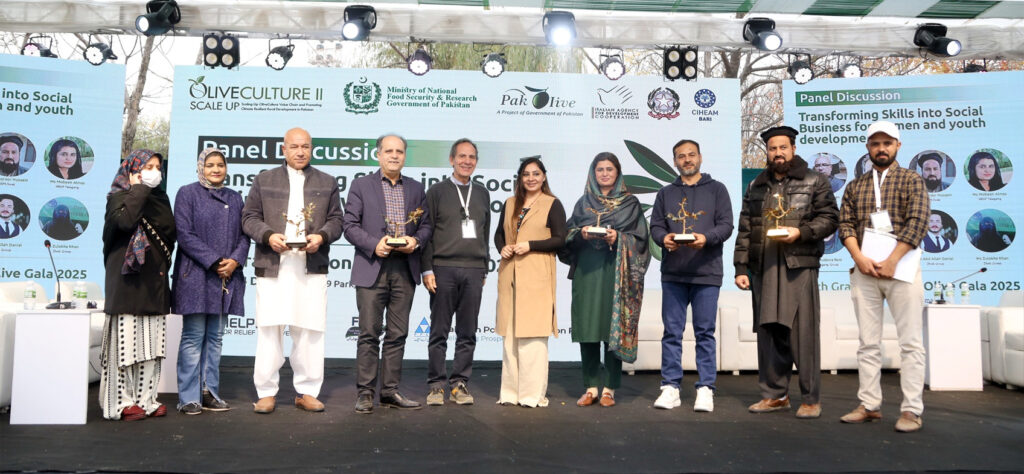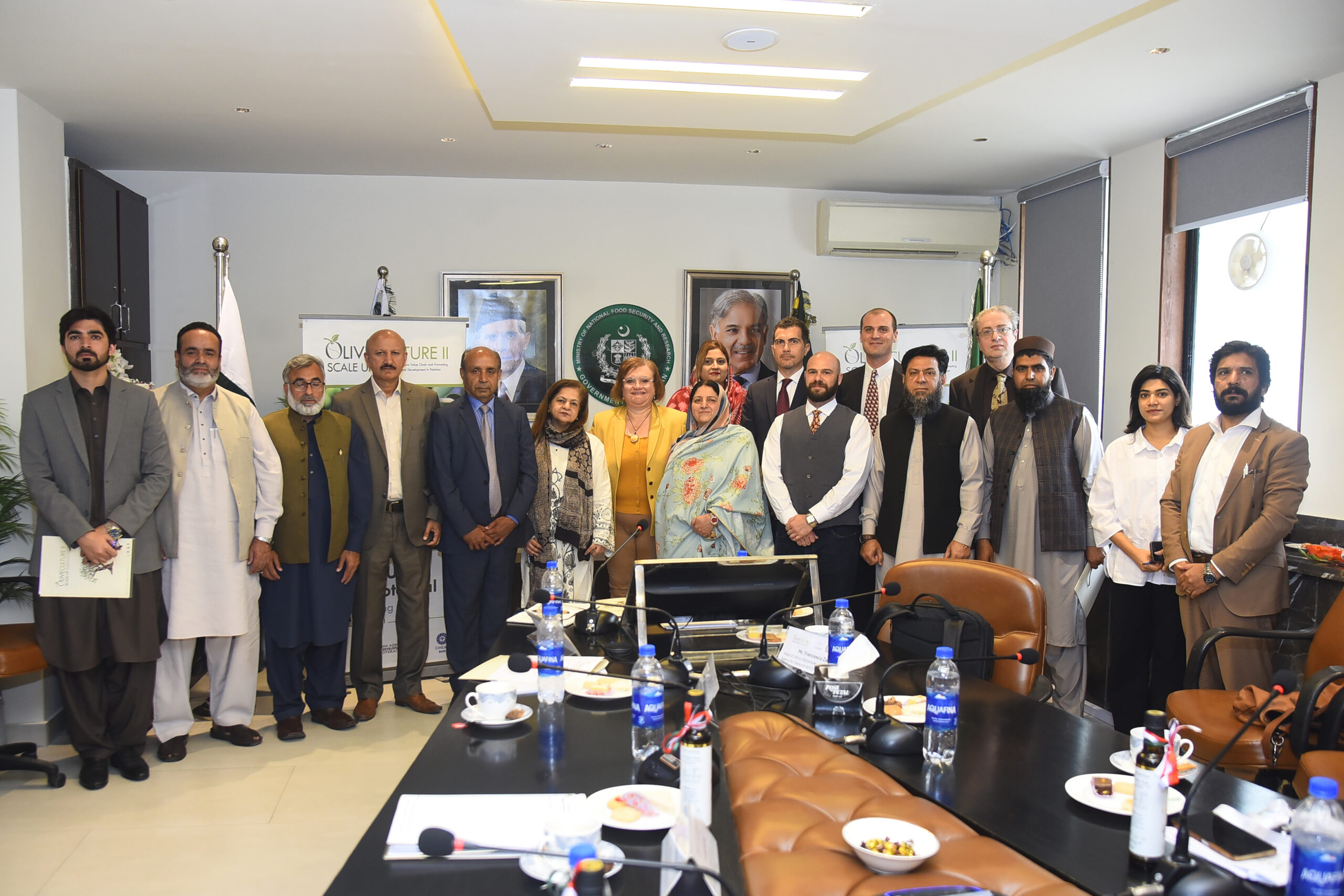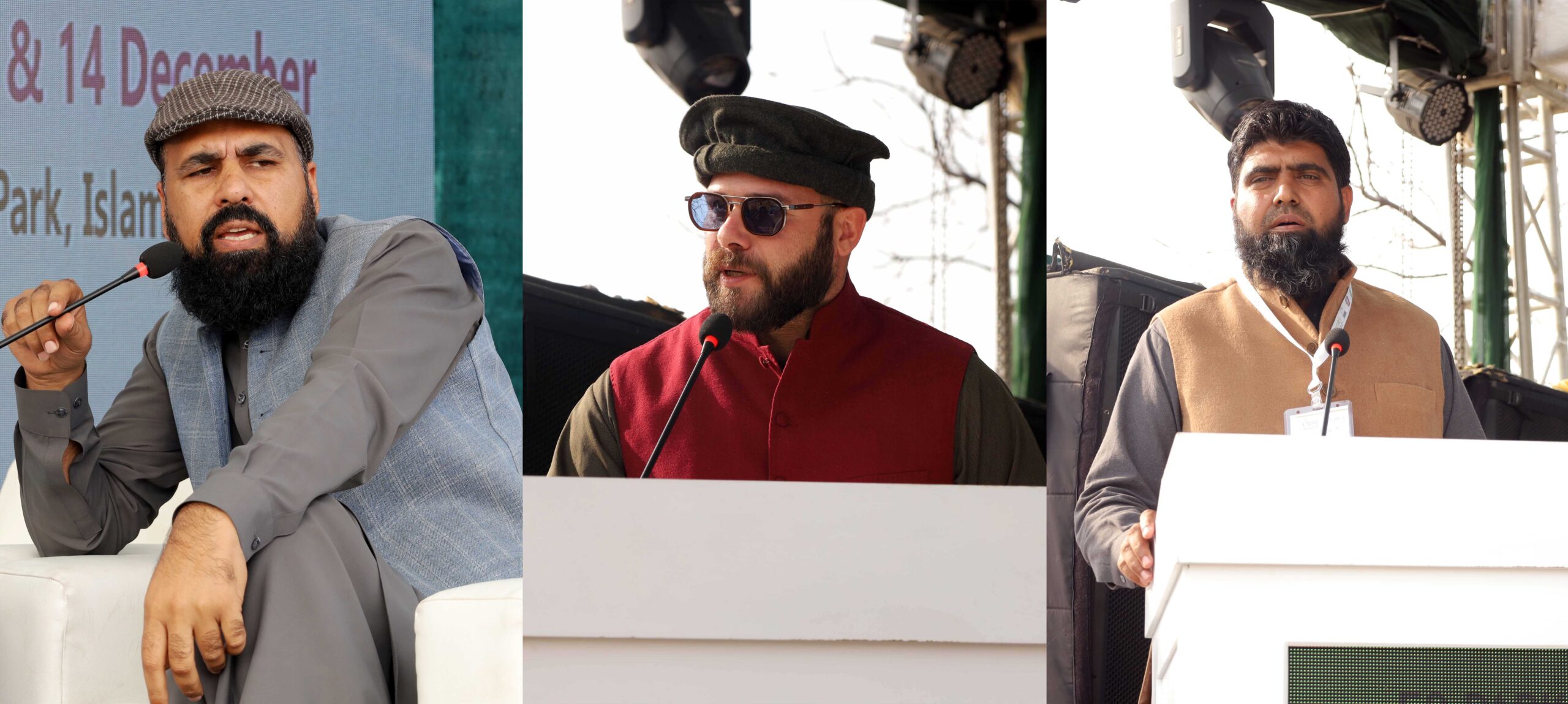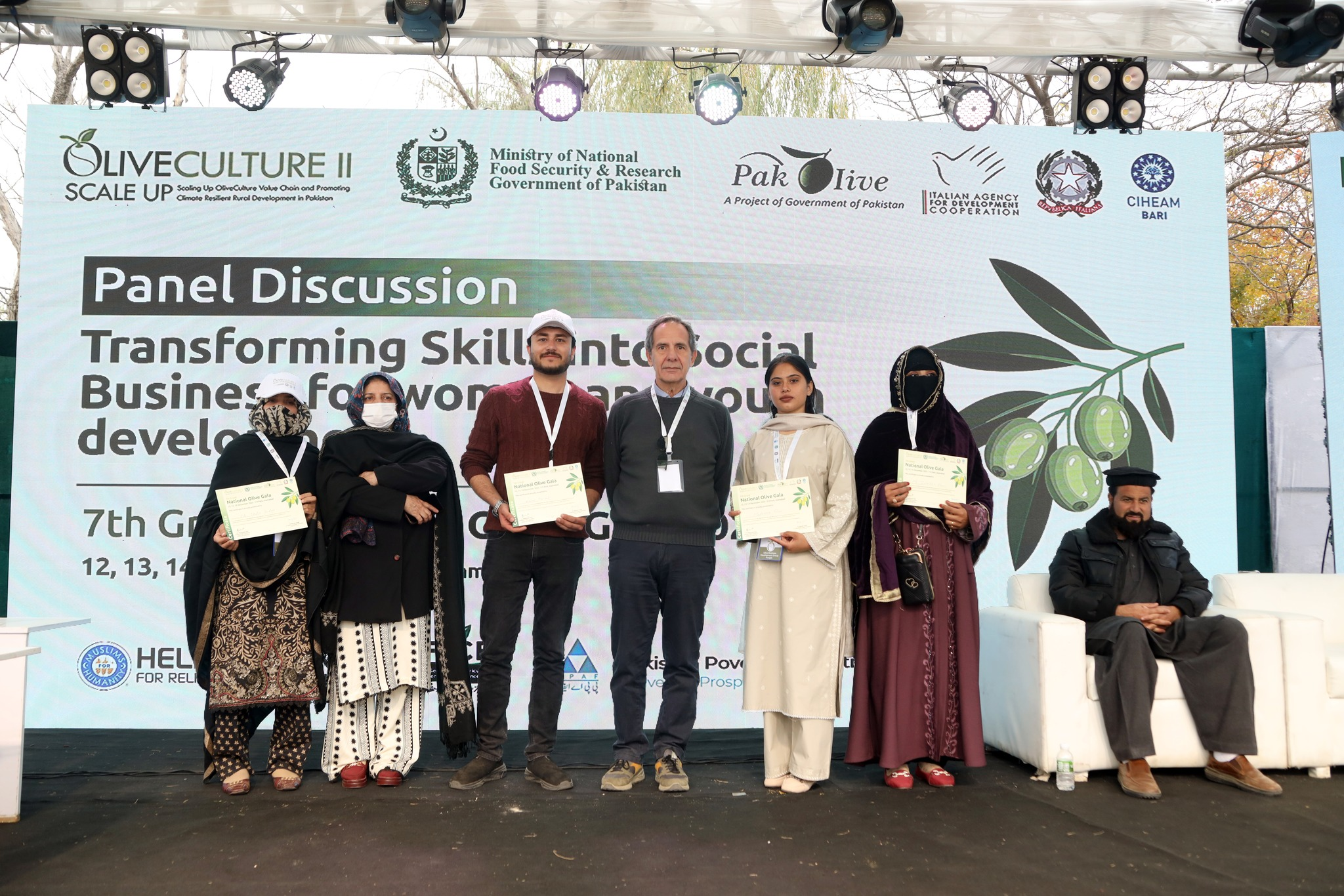
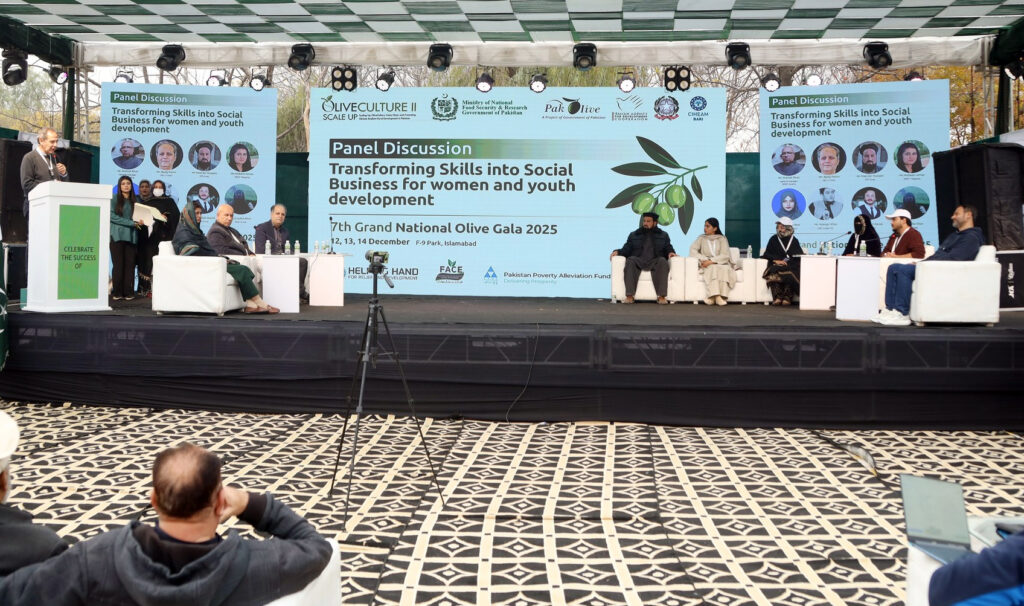
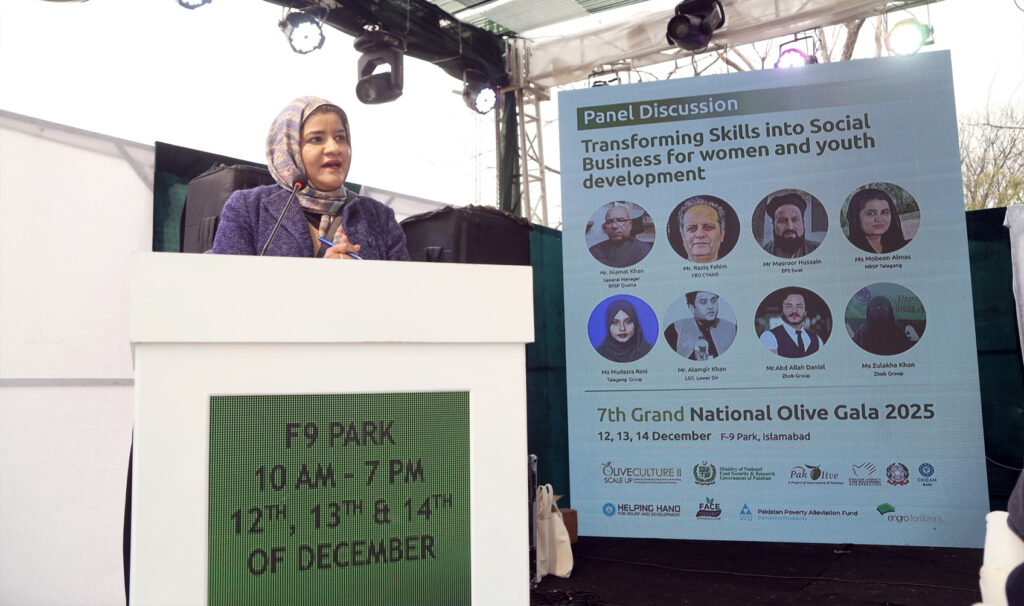
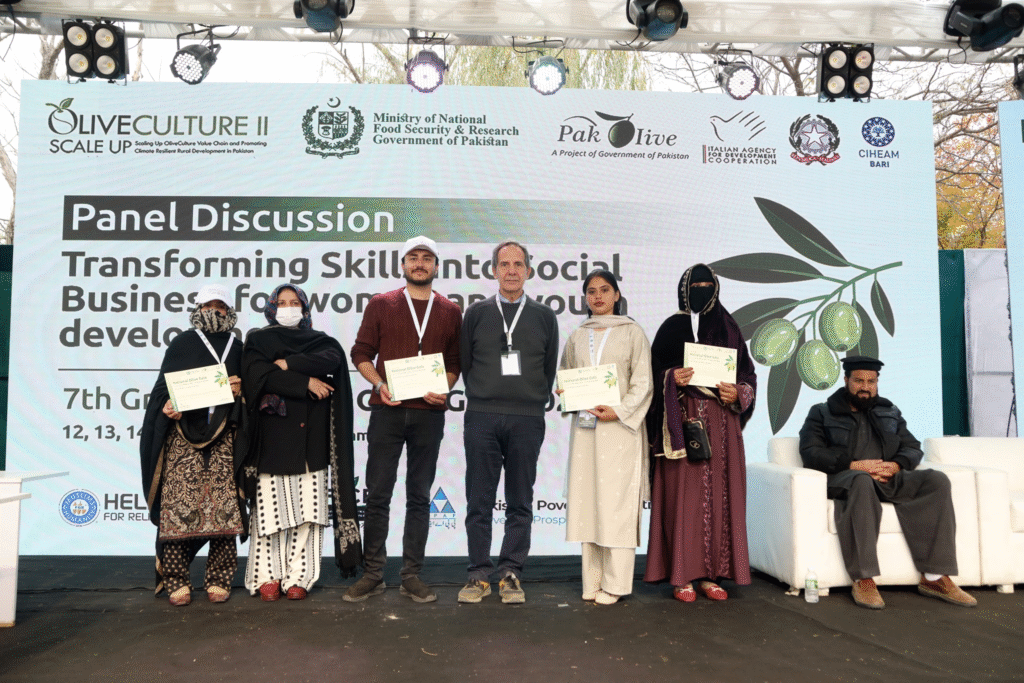
As part of the 7th Grand National Olive Gala 2025 in Islamabad, the panel discussion on “Transforming Skills into Social Business for Women and Youth Development” convened policymakers, practitioners, and representatives from community-led Olive Business Development Groups (OBDGs) to discuss inclusive enterprise development within Pakistan’s olive sector. Attended by 50 to 60 participants from multiple provinces, the session explored local experiences, challenges, and success stories, emphasizing how structured support and capacity building can transform community skills into sustainable businesses that foster rural growth and economic inclusion.
Building the Foundation: Formation and Mobilization of OBDGs
Panelists highlighted that the establishment of OBDGs required deep community engagement and consistent trust-building. While early stages presented social and logistical hurdles, the groups have now become functional entities—organized, mobilized, and aligned toward collective business and social development goals.
Regional Realities and Common Goals
The discussion shed light on region-specific challenges and progress. In Punjab, the focus remains on improving competitiveness and scaling production. Khyber Pakhtunkhwa faces gaps in infrastructure and skills training, while Balochistan continues to overcome barriers of remoteness and limited market access. Despite these regional differences, OBDGs across provinces are progressing steadily toward shared economic objectives.
Breaking Barriers: Women’s Role in Rural Enterprise
Cultural and social limitations around women’s participation were acknowledged as persistent challenges. However, continued engagement and awareness have led to a visible shift—women are now increasingly active in production, business management, and decision-making within their communities. This marks a significant transformation in rural socio-economic dynamics.
Market Readiness and Quality Standards
Panelists emphasized the urgent need to improve packaging, labeling, and quality assurance to enhance domestic competitiveness and prepare for international markets. Securing product certifications—including food safety and organic standards—was identified as a key milestone for gaining consumer trust and accessing premium market segments.
Branding, Digitalization, and Market Expansion
Limited visibility and brand recognition remain critical constraints. The discussion underlined the need for strong branding, storytelling, and digital marketing strategies. Encouragingly, OBDGs have begun adopting social media and e-commerce platforms to connect directly with consumers and buyers. Expanding participation in trade fairs and strengthening linkages with institutional buyers were also seen as essential next steps toward market diversification.
From Skills to Entrepreneurship
The session highlighted a clear transition from subsistence-based activities to entrepreneurial mindsets. OBDG members are now focusing on quality improvement, packaging innovations, and market outreach—moving closer to becoming viable small-scale enterprises contributing to rural economies.
The Road Ahead
In their concluding remarks, panelists stressed that sustained capacity building, certification support, digital training, and market linkages will be vital for the long-term growth of these groups. The OBDG model stands as a promising example of how community-driven enterprise development can empower women and youth while advancing Pakistan’s olive value chain and rural economy.